
How Does Car Shipping Work?
Car shipping takes five steps: quote, carrier match, pickup, transit, and delivery. Most cars are picked up within a 1 to 5 day window, and the price you book is the price you pay.
- 50,000+ Vehicles Shipped
- A+ BBB Rating
- 10+ Years Shipping Cars
Instant Transport Quote
Enter your pickup and delivery points. Takes about a minute.
Or talk to a real person: 855.422.4141
-
Price Lock Guarantee Your quote is final. Guaranteed.
-
Live Agents Standing By Real people from booking to delivery.
-
Fully Vetted Carriers FMCSA and DOT compliant.
-
Fully Bonded & Insured Bumper to bumper protection.




Read what customers say on our auto transport reviews page.
How Car Shipping Works, in Short
You book a locked price, and we assign a vetted carrier already running your route. The carrier's driver picks up, hauls, and delivers your car. You inspect the car and sign the bill of lading at both ends. That is about 10 minutes of your time.
Most cars are picked up within a 1 to 5 day window. Time on the truck runs 1 to 2 days on short trips and 7 to 10 days coast to coast. Nine out of ten cars ship on open carriers, the same trucks that deliver new cars to dealers.
Who Moves Your Car
We are a licensed broker, not a carrier. MC-796224 and USDOT 2336907. We do not own trucks or employ drivers. We vet, book, and manage the carriers who do, and we stay on the shipment until it is delivered. You can check both numbers in the FMCSA SAFER system.
Before a carrier gets your car, we check its operating authority, its insurance on file, and its safety record. The carriers we book keep $1,000,000 in liability coverage and anywhere from $100,000 to $1,000,000 in cargo insurance.
In business since 2010, with more than 50,000 vehicles shipped. Family owned, A+ with the BBB, and on the Inc. 5000 list. When you call, a real person picks up.

Broker vs Carrier: Who Does What
Most car shipping quotes come from brokers, and we are one. Here is how the work splits between us and the carrier that hauls your car.
| Task | Number 1 Auto Transport (broker) | The carrier |
|---|---|---|
| Price | Prices your route and locks the rate | Accepts the load at that rate |
| Vetting | Checks authority, insurance, and safety record | Keeps its authority and insurance active |
| Scheduling | Assigns the carrier and emails you | Calls to set pickup and delivery times |
| Hauling | Oversees the shipment until delivery | Owns the truck and transports the car |
| Insurance | Verifies the cargo policy before dispatch | Carries the cargo insurance on your car |
| Updates | Dispatch team takes your calls | Driver gives updates from the road |
| Payment | Charges the deposit after pickup | Collects the balance at delivery |
How to Ship a Car in 5 Steps
Here is the whole process in five steps. Each one gets its own section below. For prices, see our car shipping cost guide. For long hauls, read our guide to shipping a car across the country.
Quote
Give us the car, both ZIP codes, and your first available date. Your price locks when you book.
Match
We assign a vetted carrier already running your route and email you once it is set.
Pickup
The driver calls ahead. You inspect the car together and both sign the bill of lading.
Transit
Your car rides on the truck while the driver and our dispatch team keep you posted.
Delivery
The driver calls about 24 hours out. You inspect, sign, pay the balance, and take the keys.
Step 1: Get a Quote and Lock Your Price
A real quote takes about a minute. It is built from live market rates on your route, and every fee is inside the number.
What You Give Us
- Pickup and delivery ZIP codes or cities
- Year, make, and model
- Whether the car runs
- Any lift kit, roof rack, or oversized tires
- The first date the car can go
- Open or enclosed trailer
What You Get Back
- One price with every fee included
- Price Lock: the quote you book is the price you pay
- No fuel surcharge later and no fee at delivery
- A pickup window, usually 1 to 5 days
- A real person to call with questions
A deposit is charged after pickup, and the balance is paid to the driver at delivery. The payment section further down has the details.
Booking two to three weeks ahead gets the widest choice of pickup dates. From May through August and October through December, book three to four weeks out. See prices on our popular routes or by state on our ship by state page.
Step 2: We Match Your Car With a Vetted Carrier
We are the broker, so this step is our job. We find a carrier already running your route, check it, and book it.
Your order goes out to the carriers that run your lane. A truck that already passes near your pickup can take your car at the going rate. That is why the price holds and the pickup window stays short.
Once a carrier is assigned, you get an email. Then the driver calls your pickup contact to set a time.
What We Check Before a Carrier Gets Your Car
- Active operating authority. Looked up by MC number with the FMCSA.
- Insurance on file. $1,000,000 in liability and $100,000 to $1,000,000 in cargo coverage.
- Safety record. Good standing with the Federal Motor Carrier Safety Administration.
- The right equipment. Open or enclosed, and a winch if the car does not run.
How to Check Any Car Shipping Company
- Look up the MC number. Search it in the FMCSA SAFER system and make sure the authority is active.
- Read outside reviews. Check the BBB, Google, and Transport Reviews, not only the company's own site.
- Ask for the insurance certificate. Get the carrier's cargo certificate before dispatch.
Why a lowball quote stalls: carriers take the loads that pay. A car priced below the going rate sits unassigned. Our fee is inside the number we quote, and it is a number a carrier will run.
Step 3: Pickup Day and the Bill of Lading
The driver calls ahead to set a time and a spot a full-size car hauler can reach. Then you inspect the car together.
Your Part
- Hand over one set of keys
- Walk the car with the driver
- Point out every scratch, dent, and chip
- Take your own dated photos
- Sign the bill of lading and keep your copy
The Driver's Part
- Inspects the car and marks its condition
- Signs the bill of lading with you
- Loads the car and straps it down
- Leaves you a copy of the paperwork
What the Bill of Lading Is
The bill of lading is your receipt and the contract between you and the carrier. It records the car's condition before it moves. If anything comes up at delivery, this form is the record. Our guide covers what the bill of lading is used for.
Where Pickup Happens
Pickup happens at your address wherever the truck fits. A loaded car hauler can run 75 feet, so narrow streets, low branches, and local rules sometimes keep it out. Then the driver meets you at a nearby lot with room to load.
You do not have to be there. Anyone you trust can hand over the keys and sign for you.
Step 4: Your Car on the Road
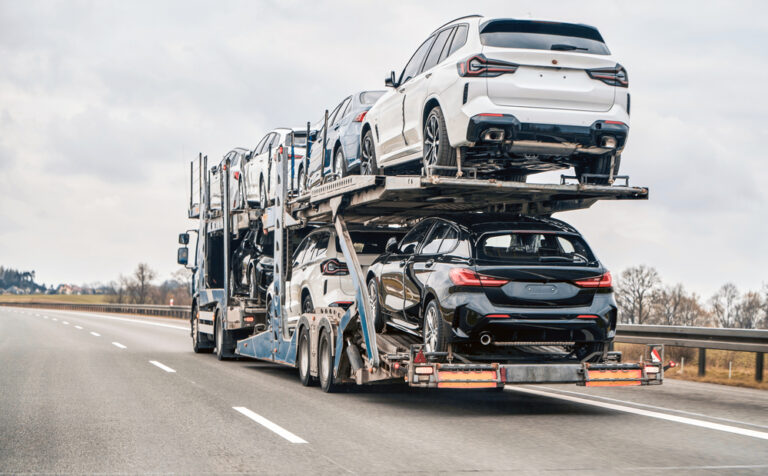
Your car rides with other vehicles on a carrier heading your way. You have nothing to do during this step.
The driver drives each car up the ramps and straps it down at the wheels. Enclosed trailers often use a lift gate or a shallow ramp for low cars.
Federal hours of service rules limit how long a driver can drive each day. Most carriers cover about 500 miles a day on the highway. Stops for the other cars on the load add time, and so can weather.
The driver gives updates from the road, and you can call the driver at any time. Our dispatch team is a phone call away too, so you can check on your car when you need to.
Step 5: Delivery Day and Final Inspection
The driver calls about 24 hours before arrival with a delivery window. Delivery works like pickup, in reverse.
Check the Car
Walk around it with the driver and compare it to the bill of lading from pickup.
Note Anything New
Write any new damage on the bill of lading before you sign. Have the driver sign it too.
Pay the Balance
Pay the driver the rest of your locked price. No fees are added at delivery.
Take the Keys
Sign, keep your copy of the bill of lading, and you are done.
If Your Car Arrives Damaged
The order of steps matters. Mark the damage on the bill of lading while the driver is there and get the driver's signature. Take clear photos. Then call us and the carrier right away.
The carrier's insurer can deny a claim for damage that was not noted on the bill of lading at delivery. In most cases the carrier asks for three repair estimates and pays one of them.
How Long Does Car Shipping Take?
Plan on a 1 to 5 day pickup window plus 1 to 10 days on the truck, depending on distance. A 500-mile move is often done within about a week of your first available date. A coast to coast move takes closer to two weeks.
Each Stage, Start to Finish
| Stage | Typical time | What happens |
|---|---|---|
| Quote | About a minute | You enter the route and the car, and the price comes back |
| First available date to pickup | Usually 1 to 5 days | We assign a carrier, you get an email, and the driver calls |
| On the truck | 1 to 10 days | Set by distance, about 500 miles a day |
| Delivery | Call about 24 hours ahead | Inspection, signatures, balance, and keys |
Time on the Truck by Distance
| Distance | Time on the truck | Example trip |
|---|---|---|
| Under 500 miles | 1 to 2 days | Atlanta to Miami |
| 500 to 1,000 miles | 2 to 3 days | Chicago to Dallas |
| 1,000 to 1,500 miles | 3 to 5 days | Denver to Seattle |
| 1,500 to 2,000 miles | 4 to 6 days | Boston to Houston |
| 2,000 to 2,500 miles | 5 to 7 days | Phoenix to New York |
| Over 2,500 miles | 7 to 10 days | Los Angeles to Boston |
These are estimates, not promised dates. Each of our route pages lists the window for its lane, and our guide to pickup and delivery times explains how carriers set their schedules.
How to Prepare Your Car for Shipping
A little prep the day before pickup prevents most problems at delivery. Work down this list.
Wash It
A clean car makes every scratch and chip easy to see at inspection.
Photograph It
Every panel, the roof, the wheels, and the odometer, with the date showing.
Leave a Quarter Tank
More fuel adds weight and buys you nothing.
Pull the Toll Tag
Or it bills you for every toll the truck drives through.
Empty the Cabin
Up to 100 pounds can ride in the trunk or back seat, below the window line, at your own risk.
Remove Loose Parts
Fold the mirrors, lower the antenna, and take off racks and loose trim.
Check the Basics
The battery, tires, and brakes need to work so the car rolls on and off.
Flag Any Leaks
A leak can drip on the car below, so tell the driver before loading.
Car does not run? Tell us when you book. It needs a carrier with a winch, which adds $100 to $250. Read our guide to shipping a car that does not run. The car shipping prep checklist and our notes on personal items in the car cover the rest.
How Payment Works
A deposit is charged after pickup, and the balance is paid to the driver at delivery. It can be paid by cash, certified check, Zelle, Venmo, Cash App, or money order. In some cases the whole payment can be made in cash at delivery.
Price Lock Guarantee
The quote you book is the price you pay. No fuel surcharge later and no fee added at delivery.
Deposit After Pickup
Charged once the carrier has picked up your car. We take all major credit cards for it.
Balance at Delivery
Paid to the driver when the car arrives. Your dispatcher confirms which methods your carrier takes before the truck shows up.
Military families get $50 off through our military auto transport program. College students get a discount through college student car shipping.
Open vs Enclosed: Which Trailer Is Right for You?
Around nine out of ten cars ship open. Enclosed costs more and protects more. Both carry the carrier's cargo insurance.
| Factor | Open transport | Enclosed transport |
|---|---|---|
| Cost | The base rate on every route | Usually 40 to 60 percent more |
| Trailer | Two-level open rack, 8 to 10 cars | Covered trailer, 2 to 7 cars |
| Exposure | Weather and road dust, like a day of driving | Sealed from weather and road debris |
| Booking | The most trucks on the road, books fastest | Fewer trucks, so book earlier |
| Best for | Daily drivers, SUVs, trucks, and leases | Classics, exotics, low cars, and fresh paint |
Which One Should You Book?
-
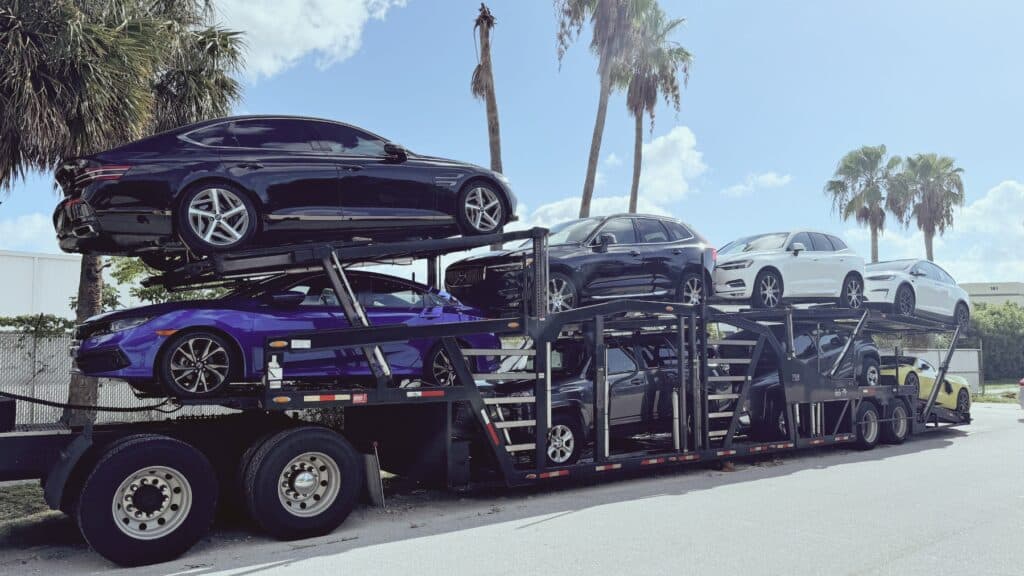
Open Transport
The right call for most cars. The same trucks that deliver new cars to dealers, at the lowest rate on the route.
-
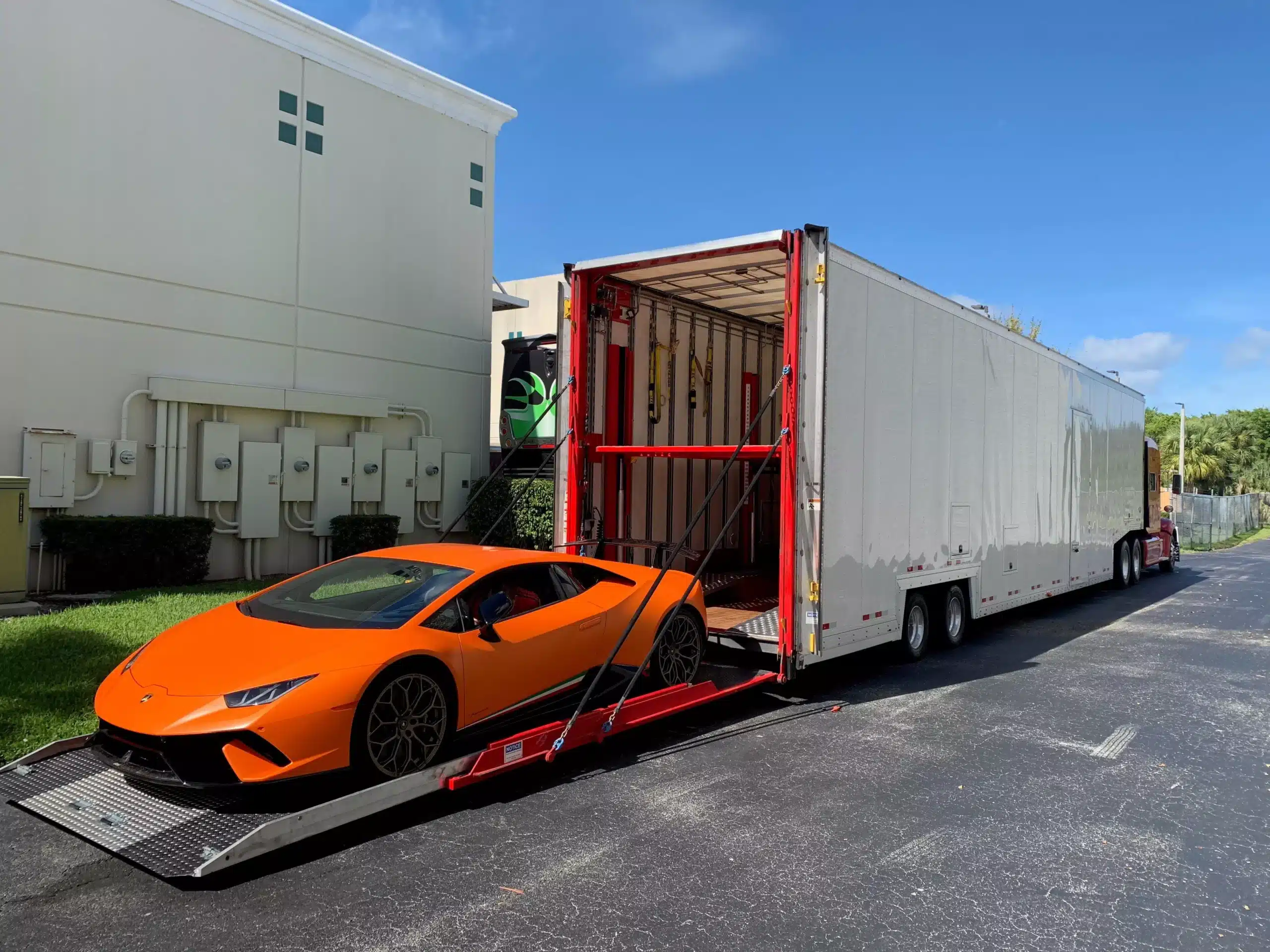
Enclosed Transport
Worth the premium when the car is worth it. Covered trailer, gentle loading, and a carrier that hauls high-value cars.
Not sure which trailer fits your car? Get both prices in one quote.
Is It Worth Shipping Your Car?
For most long moves, yes. Shipping costs money, but driving costs money and days. Here is the trade.
When Shipping Makes Sense
- Moves over about 1,000 miles
- You are flying to the new place anyway
- Military orders or a job start date
- A classic or high-value car
- Two cars and only one driver
The Trade-Offs
- You are without the car while it ships
- Pickup usually comes in a 1 to 5 day window, not at a set hour
- An open trailer sees the same weather as driving
- Tight streets can mean meeting the truck at a lot
On a 1,500-mile move, driving costs $580 to $1,060 out of pocket plus two to three days of your time. Our car shipping cost guide has the full drive or ship math. Our car shipping services page covers every vehicle type, from motorcycles to heavy equipment.
Car Shipping Process Questions
The questions people ask before they book. Our auto transport FAQ page covers the rest.
How does car shipping work?
You get a quote and lock the price, and we assign a vetted carrier already running your route. The driver picks up the car, you both sign the bill of lading, and the truck delivers it. You inspect, sign, and pay the balance at delivery.
How long does it take to ship a car?
Most cars are picked up within a 1 to 5 day window after your first available date. Time on the truck runs 1 to 2 days under 500 miles and 7 to 10 days coast to coast. Weather and road closures can add a day.
How much does it cost to ship a car?
Across the 24 routes we publish, a standard sedan costs $450 to $1,800 on an open carrier and $875 to $2,800 enclosed. Distance, vehicle size, trailer type, and the month set where your trip lands.
How do I get a car shipping quote?
Use the quote form at the top of this page or call 855.422.4141. Have both ZIP codes, the year, make, and model, whether the car runs, and your first available date. The quote is free, with no obligation.
How far ahead should I book car shipping?
Two to three weeks ahead gets the widest choice of pickup dates and the steadiest price. From May through August and October through December, book three to four weeks out. We can often dispatch sooner.
Where will my car be picked up and delivered?
At your address wherever the truck fits. A loaded car hauler is long, so narrow streets, low branches, and local rules sometimes keep it out. Then the driver meets you at a nearby lot with room to load.
Do I have to be there at pickup and delivery?
No. Anyone you trust can meet the driver, walk the car, and sign the bill of lading for you. Leave them a set of keys and give us their name and number when you book.
What is a bill of lading?
It is your receipt and the contract between you and the carrier. The driver records the car's condition on it at pickup, and you both sign. At delivery you check the car against it, so it is the record for any claim.
How do car haulers load a car?
The driver drives each car up the ramps onto the trailer and straps it down at the wheels. Enclosed trailers often use a lift gate or a shallow ramp for low cars. A car that does not run gets winched on.
Does my car have to be empty when I ship it?
Mostly. You can leave up to 100 pounds in the trunk or back seat, below the window line, at your own risk. Those items are not covered by the carrier's cargo insurance, so leave valuables, electronics, and documents out.
How do I prepare my car for shipping?
Wash it, photograph every side, and leave about a quarter tank of gas. Pull the toll tag, empty the cabin, and remove racks or loose parts. Tell the driver about any leaks before loading.
Is my car insured during shipping?
Yes. Every carrier we assign carries active cargo insurance, and we verify it before dispatch. Coverage runs from pickup through delivery. Ask your agent for the certificate and we will send it.
What happens if my car arrives damaged?
Write the damage on the bill of lading before you sign, and have the driver sign it too. Take photos, then call us and the carrier right away. The carrier's insurer can deny a claim for damage not noted at delivery.
How do I track my car during shipping?
The driver gives updates from the road, and you can call the driver at any time. Our team also takes calls Monday to Friday 8am to 8pm ET and Saturday 9am to 5pm ET.
How do I pay for car shipping?
A deposit is charged after pickup. The balance is paid to the driver at delivery by cash, certified check, Zelle, Venmo, Cash App, or money order. Your dispatcher confirms which ones your carrier takes. In some cases the whole payment can be made in cash at delivery.
Do you tip car transport drivers?
Tipping is up to you. The carrier's pay is already inside the price you locked, so you owe nothing beyond the balance. If a driver goes out of the way for you, a tip is a kind gesture.
Is Number 1 Auto Transport a broker or a carrier?
We are a licensed broker, not a carrier. MC-796224 and USDOT 2336907. We do not own trucks or employ drivers. We vet, book, and manage the carriers who do, and we stay on the shipment until it is delivered.
What are the disadvantages of shipping a car?
You are without the car while it ships. Pickup usually comes in a 1 to 5 day window, not at a set hour. On an open trailer the car sees the same weather as a day of driving. Tight streets can mean meeting the driver at a nearby lot.
Get Your Car Shipping Quote
Enter your pickup and delivery points in the form above, or call and talk to a real person. Read what customers say on our auto transport reviews page, then lock your rate.
Number 1 Auto Transport
Phone: 855.422.4141
Hours: Monday to Friday 8am to 8pm ET, Saturday 9am to 5pm ET
MC-796224 | USDOT 2336907
Number 1 Auto Transport is a licensed and bonded auto transport broker, not a motor carrier. We arrange transportation with vetted, FMCSA-authorized carriers who hold active cargo insurance. Prices and transit times shown are typical ranges, not a binding quote. Your locked rate is confirmed at booking.