
Classic Car Transport: Open or Enclosed Shipping for Classic and Antique Cars
We arrange classic car transport across the continental United States. Restored cars ride enclosed. Project cars can ride open for less. Your price locks when you book.
- 50,000+ Vehicles Shipped
- A+ BBB Rating
- 10+ Years Shipping Cars
Instant Transport Quote
Enter both locations. Have the year, make, and model ready, and tell us if the car does not run.
Or talk to a real person: 855.422.4141
-
Price Lock Guarantee Your quote is final. Guaranteed.
-
Live Agents Standing By Real people from booking to delivery.
-
Fully Vetted Carriers FMCSA and DOT compliant.
-
Fully Bonded & Insured Bumper to bumper protection.




Read what customers say on our auto transport reviews page.
Classic Car Transport, in Short
Classic car transport moves a classic, antique, or collector car on a truck built for the job. A restored car or a show car rides inside an enclosed trailer. A project car can ride on an open carrier for less. Every classic is quoted on its own, and your price locks when you book.
Most cars are picked up within a 1 to 5 day window and spend 1 to 10 days on the truck. Enclosed trucks are fewer, so book 2 to 3 weeks ahead.
Who Moves Your Car
We are a licensed broker, not a carrier. MC-796224 and USDOT 2336907. We do not own trucks or employ drivers. We vet, book, and manage the carriers who do, and we stay on the shipment until it is delivered. You can check both numbers in the FMCSA SAFER system.
Before a carrier gets your car, we check its authority, its insurance on file, and its safety record. The carriers we book keep $1,000,000 in liability and $100,000 to $1,000,000 in cargo coverage.
In business since 2010, with more than 50,000 vehicles shipped. Family owned, A+ with the BBB, and on the Inc. 5000 list. When you call, a real person picks up.

Should a Classic Car Ship Open or Enclosed?
Ship enclosed if the car is restored, original, or worth more than a rock chip can excuse. Ship open if it is a project car. Enclosed usually costs 40 to 60 percent more than open on the same route. Ask us for both prices in one quote.
The Two Ways a Classic Rides
-

Open Carrier
The same two-level truck that delivers new cars to dealers. It is the lowest rate and the fastest booking, and it fits a project car or a parts car.
-
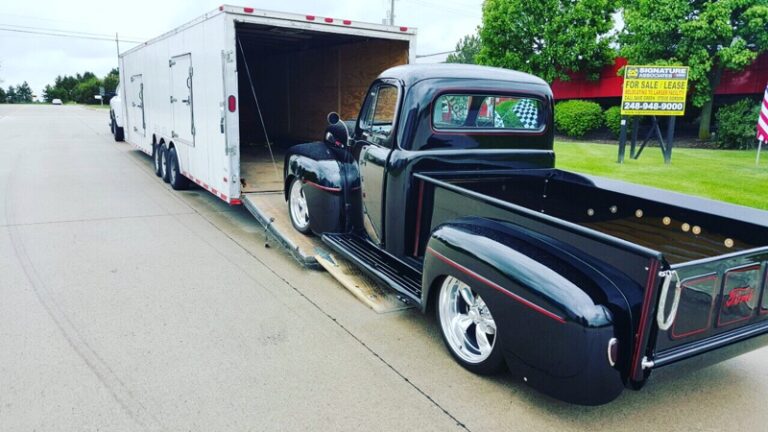
Enclosed Trailer
A trailer with walls and a roof. It keeps out rain, hail, road salt, and gravel. Most enclosed carriers load low cars on a lift gate or extended ramps, and many use soft tire straps.
Open vs Enclosed for a Classic
| Factor | Enclosed transport | Open transport |
|---|---|---|
| Cost | Usually 40 to 60 percent more, and more on short trips | The base rate on every route |
| Exposure | Sealed from weather, road debris, and eyes | Weather and road dust, like a day of driving |
| Trucks on the road | About 15 percent of car haulers. Book 2 to 3 weeks ahead | About 85 percent. Books in 1 to 2 weeks |
| Loading | Lift gate or extended ramps on most trucks, soft straps on many | Standard ramps, wheel straps |
| Best for | Restored, original, show, and high-value classics | Project cars, parts cars, and daily drivers |
Which One Fits Your Classic?
-
Ship Enclosed When
- It is restored, original, or headed to a show
- The paint, chrome, or top is hard to replace
- It sits low or has loose trim
- It ships in hail season or on salted roads
-
Open Works When
- It is a project car or a parts car
- You want the lowest rate and the fastest booking
- A rock chip would not change what it is worth
- It is headed to the body shop anyway
Our open car shipping page covers the two-level trucks. Our enclosed auto transport page covers the trailers.
Not sure which way to ship? Get the open and enclosed price in one quote.
What Counts as a Classic Car?
It depends on who is asking. Car clubs, insurers, and state motor vehicle offices each set their own cutoff. Most definitions put the line at 20 to 25 years. Hagerty says 20. The Antique Automobile Club of America says 25. The Classic Car Club of America limits its Full Classic title to certain cars built from 1915 to 1948. None of it changes how the car ships.
Antique, Vintage, and Classic
Antique
Cars from the earliest years of the automobile, including the brass era before 1919. The Antique Automobile Club of America uses 25 years. States set their own age for antique plates.
Vintage
Cars built from about 1919 to 1930 and kept mostly original, in the common usage.
Classic
A car 20 years old or more, by Hagerty's rule, and usually no older than about 40.
The Cutoffs That Matter
- The Classic Car Club of America recognizes a Full Classic only among fine or distinctive cars built from 1915 through 1948. Only certain models qualify. Think Packard, Pierce-Arrow, Duesenberg, and Rolls-Royce from that era.
- Hagerty says the classic window opens at 20 years old and usually closes at about 40. The Antique Automobile Club of America lets cars 25 years old or more into its touring events.
- States set their own age for antique or historical plates. Michigan asks for 26 years. Colorado asks for 32. Check your state's motor vehicle office.
- For transport, the age does not matter. What matters is the car's value, its ground clearance, whether it runs, and how much you want to keep off the paint.
How Much Does Classic Car Transport Cost?
Every classic car is quoted on its own. We do not publish a flat rate for classics. The price turns on the trailer, the miles, the car, and your dates. Send the car and both locations, and we come back with a price that locks when you book.
Your quote covers the full move, with no hidden fees. Our car shipping cost guide explains how car shipping is priced, with open and enclosed rates on 24 published routes.
What Sets Your Classic Car Shipping Price
- Open or enclosed. Enclosed usually runs 40 to 60 percent more than open on the same route. On short trips, a minimum charge sets the price.
- Distance and route. Longer trips cost more in total and less per mile. Demand on the lane moves the price too.
- The car. A long sedan or a pickup takes more deck space than a roadster. A low car needs a lift gate or extended ramps, which narrows the trucks that can take it.
- Running or not. A car that rolls, steers, and brakes but will not start needs a winch. That adds $100 to $250. A car that cannot roll needs a specialty rig and its own quote.
- Season. On most lanes, October through December and May through August run above base. January and February usually cost the least.
- Your dates. Fewer enclosed trucks run each route, so a flexible pickup window helps.
What to Send for a Quote
Year, Make, and Model
Plus anything that changes the size, like a long wheelbase or a hitch.
How It Sits
Low ground clearance, a lowered stance, or a wide body.
Running or Not
Whether it starts, rolls, steers, and brakes on its own.
Places and Dates
Both addresses, anything tight about getting a truck in, and your first available date.
Have the details handy? One call or a quick form gets you a quote. Your rate locks when you book.
How Long Does Classic Car Transport Take?
Plan on a 1 to 5 day pickup window, then 1 to 10 days on the truck. Enclosed trucks are fewer, so an enclosed pickup can land at the long end of the window.
From Booking to Delivery
| Stage | How long | What happens |
|---|---|---|
| Booking | 1 to 4 weeks ahead | Open books in 1 to 2 weeks. Enclosed takes 2 to 3, and 3 to 4 in peak season. |
| Pickup window | Usually 1 to 5 days | The driver calls to set a time. Remote areas and peak season sit at the long end. |
| On the truck | 1 to 10 days | Set by distance. Most carriers cover about 500 miles a day under federal hours of service rules. |
| Delivery | A call about 24 hours out | The driver confirms the window. You inspect the car and sign the bill of lading. |
These are typical windows, not promised dates. Storms and road closures slow enclosed trucks the same as open ones and can add a day or more. Read how weather affects auto transport.
Is Classic Car Transport Safe?
Yes, when the carrier is vetted and the car is loaded for what it is. The carrier's cargo insurance is on your car from pickup to delivery, up to its policy limit.
How a Classic Rides
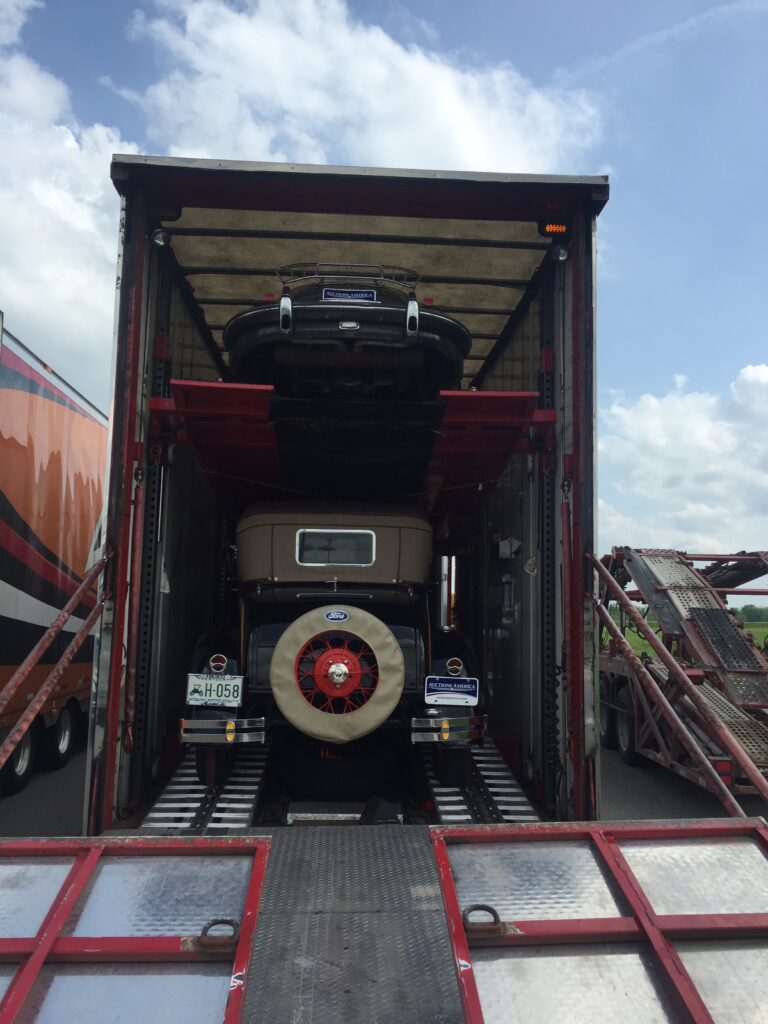
On an enclosed truck, most carriers load low cars on a lift gate or extended ramps. The bumper and underbody clear the edge. Many secure the car with soft straps around the tires, so nothing hooks to the frame.
On an open truck, the car rides on a deck with wheel straps. Ask us for a top-load spot. A car above yours can drip, and the top deck keeps that off your paint.
Tell us about a soft top, loose trim, or a car that leaks, so the carrier can plan for it.
Watch a Classic Car Load for Transport
A clip from our YouTube channel.

What Keeps Your Classic Safe
Vetted Carriers
We check each carrier's operating authority, insurance on file, and safety record before it gets your car.
Cargo Insurance
Carriers we book keep $1,000,000 in liability and $100,000 to $1,000,000 in cargo coverage. Limits vary by carrier.
Gentle Loading
A lift gate or extended ramps on most enclosed trucks. Soft tire straps on many.
Bill of Lading
You and the driver record the car's condition at pickup and check it again at delivery.
Check the Cargo Limit Against Your Car's Value
Ask us for the carrier's insurance certificate before dispatch. Check the cargo limit and the deductible against what your car is worth. Ask whether the policy pays an agreed value or the market value. A restored car can be worth far more than a price guide says. If your car is worth more than the limit, tell us before you book.
Your own collector car policy may also cover the car in transit, so call your agent. Our guide on whether you need insurance to ship your car covers the details.
If Your Car Arrives Damaged
Mark the damage on the bill of lading while the driver is there, and get the driver's signature. Take clear photos. Then call us right away. The carrier's insurer can deny a claim for damage that was not noted at delivery.
In most cases the carrier asks for three repair estimates and pays one. Our guide on what to do if your car is damaged during transport walks through the claim.
Classic Car Moves We Arrange
These are the classic moves we book most often. Our car shipping services page covers the rest.
Auction Purchases
We book pickups from collector car auctions, including Mecum and Barrett-Jackson events. Send us the lot number and the release details.
Project Cars That Do Not Run
A car that rolls, steers, and brakes can be winched onto the truck. Tell us when you book.
Restoration Shop Trips
A car headed to a shop across the country, or coming home with fresh paint. Fresh paint should ride enclosed.
Snowbird Classics
A classic that winters in Florida or Arizona. Book 3 to 4 weeks ahead.
Vintage Motorcycles
Crated on a pallet inside an enclosed trailer is the safest way to ship a bike.
Exotic and Collector Cars
Exotics and modern collector cars ship enclosed, on a lift gate or extended ramps.
How Classic Car Transport Works
Open or enclosed, every shipment runs on the same five steps. Our how car shipping works guide covers each one.
Quote
Tell us the car, both ZIP codes, whether it runs, and your first available date. The price locks when you book.
Match
We book a vetted carrier with the right truck headed your way, then email you the details.
Pickup
The driver calls ahead to set a time. You walk the car together and both sign the bill of lading.
Transit
The car rides to its destination while the driver and our dispatch team keep you updated.
Delivery
The driver calls about 24 hours out. You check the car, sign, pay the balance, and take the keys.
How to Prepare a Classic Car for Transport
A little prep the day before pickup prevents most problems at delivery.
Wash It
A clean car shows every chip and scratch at inspection.
Photograph It
Every panel, the top, the chrome, the wheels, and the odometer, with the date showing.
Note What Is Already There
Write down the chips, dings, and worn spots you know about. Keep a copy for delivery.
Latch the Top and the Trim
Put a soft top up and latch it. Secure loose trim and hubcaps.
Flag Leaks and Quirks
Old cars drip. Tell the driver what leaks, how the car starts, and any trick to the brakes.
Leave a Quarter Tank
More fuel adds weight and buys you nothing.
Empty the Car
Up to 100 pounds can ride in the trunk or back seat, below the window line. It rides at your own risk and is not covered by the carrier's insurance. Spare parts count.
Have the Keys Ready
The driver needs a key. An auction or a shop may also need a release form.
Car does not run? Tell us when you book, and read our guide to shipping a car that does not run. The car shipping prep checklist covers the rest.
Classic Car Transport by Brand, Route, and State
We arrange classic car transport across the continental United States. Each route page lists open and enclosed prices for a standard car.
Classic Brands We Ship
Find your make on our auto transport by brand hub.
Popular Routes With Open and Enclosed Prices
- New York to Florida
- New York to California
- California to Texas
- Texas to California
- New York to Arizona
- Florida to New Jersey
- Atlanta to Dallas
- San Diego to Portland
See all 24 on our popular car shipping routes page.
Car Shipping by State
Every state has its own guide. Find yours on our ship by state page.
Classic Car Transport Questions
Quick answers before you book. Our auto transport FAQ page covers the rest.
What is classic car transport?
Moving a classic, antique, or collector car on a truck built for the job. A restored car rides inside an enclosed trailer. A project car can ride on an open carrier for less.
How much does it cost to transport a classic car?
Every classic is quoted on its own. The price depends on open or enclosed, the distance, the car's size and clearance, whether it runs, the season, and your dates. Your price locks when you book.
Should I ship my classic car open or enclosed?
Enclosed for a restored, original, or show car, or any car with paint you want to keep. Open for a project car or a parts car. Enclosed usually costs 40 to 60 percent more.
What counts as a classic car?
It depends on who is asking. Most definitions put the line at 20 to 25 years. Hagerty says 20, and the Antique Automobile Club of America says 25. The Classic Car Club of America limits its Full Classic title to certain fine cars built from 1915 to 1948. States set their own age for antique plates.
Who transports classic cars?
Licensed motor carriers with the right trucks, booked through a broker like us. We check each carrier's authority, insurance, and safety record, then book the one with the right truck for your car.
How do I ship a classic car to another state?
Get a quote with both ZIP codes, book, and set your first available date. The driver usually picks the car up within a 1 to 5 day window. Then it rides 1 to 10 days to the other state.
How long does classic car transport take?
Most cars are picked up within a 1 to 5 day window. Time on the truck runs 1 to 10 days, depending on distance. Book 2 to 3 weeks ahead for enclosed, and 1 to 2 weeks for open.
Can you ship a classic car that does not run?
Yes, if it rolls, steers, and brakes. The carrier winches it onto the truck, which adds $100 to $250. A car that cannot roll needs a specialty rig and its own quote.
Is my classic car insured during transport?
Yes. Carriers we book keep $1,000,000 in liability and $100,000 to $1,000,000 in cargo coverage, and we verify it before dispatch. Limits vary, so ask for the certificate and check the limit against your car's value.
How is a classic car loaded and secured?
On most enclosed trucks, a lift gate lifts the car level, or extended ramps flatten the climb. Many hold it with soft straps around the tires. On an open truck, it rides on a deck with wheel straps. Ask us for a top-load spot.
Can you pick up a classic car from an auction?
Yes. We book pickups from collector car auctions, including Mecum and Barrett-Jackson events. Send us the lot number and the release details when you book.
What happens if my classic car is damaged during transport?
Mark the damage on the bill of lading before the driver leaves, get the driver's signature, and take photos. Then call us. In most cases the carrier asks for three repair estimates and pays one.
Is Number 1 Auto Transport a broker or a carrier?
We are a licensed broker, not a carrier. MC-796224 and USDOT 2336907. We do not own trucks or employ drivers. We vet, book, and manage the carriers who do, and we stay on the shipment until it is delivered.
How do I pay for classic car transport?
A deposit is charged after pickup. The balance is paid to the driver at delivery by cash, certified check, Zelle, Venmo, Cash App, or money order. Your dispatcher confirms which ones your carrier takes.
Get Your Classic Car Transport Quote
Enter your pickup and delivery points in the form at the top of this page, or call and talk to a real person. Read our auto transport reviews, then lock your rate.
Number 1 Auto Transport
Phone: 855.422.4141
Hours: Monday to Friday 8am to 8pm ET, Saturday 9am to 5pm ET
MC-796224 | USDOT 2336907
Number 1 Auto Transport is a licensed and bonded auto transport broker, not a motor carrier. We arrange transportation with vetted, FMCSA-authorized carriers who hold active cargo insurance. Transit times shown are typical ranges, not promised dates. Your locked rate is confirmed at booking.